The final night of dancing in 1948 was 5 November and the Finlaysons arranged for it to be a combined class, complete with balloons and supper. As it was Guy Fawkes night, day-boys took fireworks to the class and distributed them to boarders as well. One of the culprits recall that it started as innocent fun but then went over the top: ‘I remember throwing “bungers” on the floor and dancing to the other end watching the girls squeal as they went off.’ Chester Eagle’s version is this: ‘Dancing starts. Crackers go off. Boys appear in the doorway and disappear. Crackers explode on the floor. Dresses are damaged… Pansy can’t control us. Janet has no authority.
It goes on for what seems like ages.’ Supper was held in another Merton Hall building further down Anderson Street, where the mayhem continued. To fifteen-year-old Thomas Lyle’s (OM 1951) amazement and horror, ‘one boy lit a homemade bunger in the middle of Anderson Street and blew a hole in it. While supper was on, some boys placed bungers under the girls’ chairs while others were diverting their attention. We all thought this was hilarious. Unfortunately the varnished supper room floor had burn marks on it and some girls’ frocks had holes burnt in them.
Miss Dorothy Ross, headmistress of Merton Hall, was furious and complained to Sutcliffe. Their working relationship had never been harmonious, probably because of her avant-garde and innovative approach to education. Over the weekend and during the following week, pupils were questioned, behavioural lectures delivered and Friday was announced as a day of reckoning. Lyle was in a state of panic when Sutcliffe called a formal assembly in the hall. He was ‘absolutely terrified. The headmaster stormed onto the stage, whacked his umbrella on the table (it broke in half, nobody laughed) and after several minutes of controlled fury when he was well and truly on the offensive’ publicly expelled eighteen of the pupils at once.
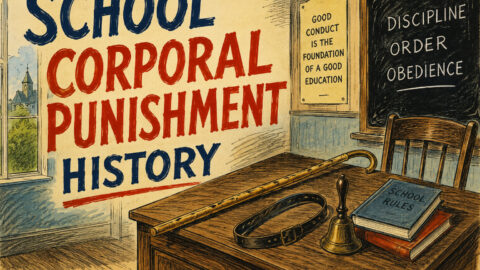
Lyle was not one of these but was one of nine to be caned by the school captain, Ken James (OM 1948), in the headmaster’s study. Eagle recalls: ‘Certain boys, and he reads their names, will go to his study directly after assembly to be caned. Others will leave the school immediately but will be allowed to return to sit their final exams. A third group will leave the assembly at once, never to return. He read their names. We watch them, shocked.’
Eagle goes on to describe the silence that settled on the school in the weeks which followed these momentous events. He attributes Sutcliffe’s final fall from grace to parental pressure. But Council had not always kept its distance from matters of school discipline, as we saw with Wilson and Bromby. Sometimes, under petition from teachers, pupils or parents to interfere in disciplinary action taken by a headmaster, Council weakened, This time there was a combination of parental pressure as well as the opportunity for dismissal that prompted the Council to overrule Sutcliffe’s disciplinary decisions.
He was forced to announce this reversal and his ‘resignation’ to the whole school at an informal assembly held in the quad on the chapel step. ‘We sense it’s going to be painful, but we’re excited. What’s he going to say?… Council has seen fit to overrule his decisions. Those who’ve been expelled will return… It’s obviously painful for him, but there’s no loss of self-control… “I will take up a new position next year”, he says, and it hits us that he’s resigned.’”
Sir Brian Hone, Headmaster: “As was his way, Hone provided an organisational amber light. If a master wished to punish with a Saturday detention, the ultimate sanction available to him, because Hone abolished most caning, the ‘Saturday card’, defining the offence, had to be signed by a parent and the boy’s housemaster. Because this made vindictive or frivolous punishments questionable, staff became more careful.”
The following is from a 1990 history of Geelong Grammar School –
Mr John Bracebridge Wilson, Headmaster, 1863 Prospectus: “In conducting the discipline of the school, the Headmaster has ever kept before him the following principles: on the part of the masters strict justice, united to kindliness and forbearance; on the part of the boys, truth and obedience. Untruthfulness in word or act, and willful disobedience, are the only offences for which corporal punishment is inflicted, and it is rarely found necessary to resort to it.”
“He had high standards and tried to insist on the principle, expressed in his 1863 prospectus, that boys were to be encouraged to take pleasure in their work by masters who also enjoyed what they were doing. Alas, what was natural to a gentle but commanding person like Wilson, a transparently sincere man who loved boys and even preferred the naughty ones, was beyond the reach of the common herd of colonial schoolmasters. They could not measure up and must have found it impossible to maintain order in a school at which the sanctions of corporal punishment, detentions and impositions were frowned upon and where their example, not just their rhetoric, was regarded as essential.”
“Gradually, though, Wilson had to become less demanding and even to use the tawse to support a weak master. He also abandoned his opposition to impositions and made detentions the most common punishment. Perhaps the school had grown too large for the enlightened methods he had been able to operate at the high school. For all that, he was known for his justice and humanity and for a gentleness which contrasted strongly with the ‘beat first and ask questions afterwards’ approach of many schools in that period.”