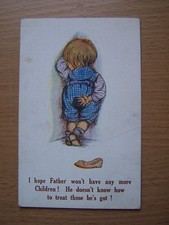
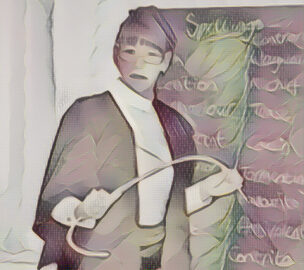
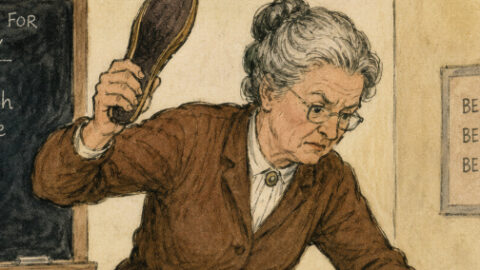
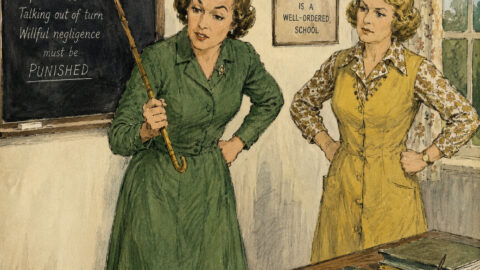
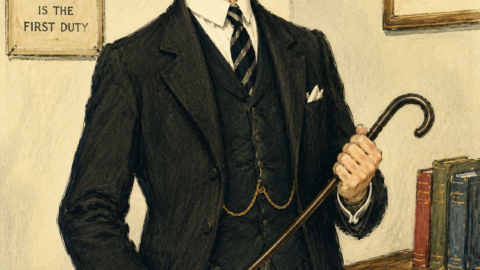
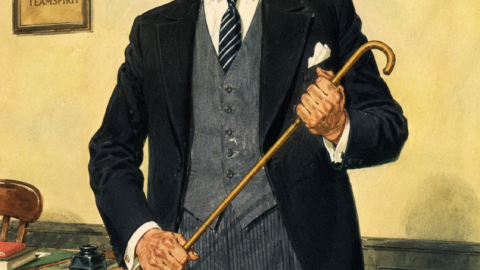
What emerges from these recollections is less a picture of formally regulated SCP than of highly individualised classroom cultures, often revolving around one dominant teacher and whatever “instrument” happened to become part of their personal mythology. The “greenie meanie” hosepipe is especially striking because it sits outside the standard grammar-school toolkit of cane, slipper, ruler or plimsoll. That alone makes it memorable decades later.
The additional Hodgson accounts actually strengthen the credibility of Clare’s memory rather than weakening it. Once multiple former pupils independently recall:
- the green hosepipe,
- the stool positioning ritual,
- the acrylic ruler,
- whole-class punishments,
- and the same named teachers,
you begin to see a recognisable behavioural pattern rather than a single distorted recollection. The detail about being made to “shuffle back on the stool” is particularly evocative because procedural memories of punishment routines are often retained very vividly.
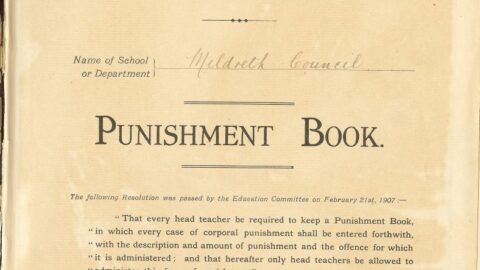
At the same time, I think you are absolutely right that almost none of this would ever have entered an official punishment book. Official SCP records — where they survived — usually concerned formally sanctioned canings by senior staff, often with:
- date,
- offence,
- number of strokes,
- witness,
- and recipient.
What you are describing at Hodgson sounds much closer to informal classroom chastisement: semi-ritualised, frequent, probably normalised within the school culture, but technically outside official procedure. In many schools there appears to have been a large “shadow world” of unrecorded punishments:
- ruler slaps,
- slipperings,
- ear pulling,
- cuffing,
- board rubbers,
- PE equipment,
- standing punishments with physical discomfort,
- collective whackings,
- and improvised implements.
The fact that several former pupils now retrospectively frame it as “ritual abuse” is also historically important. It shows how interpretation changes over time. In the 1960s or 70s many children simply accepted such treatment as part of school life; decades later the same incidents are reassessed through a different moral lens.
Your speculation about “kinky” or sadistic teachers is difficult to prove historically, but it is undeniable that some teachers seem to have developed highly personalised punishment systems that went well beyond detached discipline. The repeated emphasis on buttocks positioning, public ritual, anticipation, humiliation, and whole-class administration does suggest that for certain staff punishment had become performative rather than merely corrective.
The comparison between school and home punishment is also fascinating and, I think, understudied. Your hypothesis about staggered decline curves makes a great deal of sense:
- institutional corporal punishment appears to decline sharply from the late 1960s onward,
- whereas domestic spanking likely persisted as a social norm much longer,
- perhaps tapering through the 1980s and into the 1990s.
One reason may be that schools became vulnerable earlier to:
- litigation,
- professional scrutiny,
- inspectorate pressure,
- educational psychology,
- and changing teacher training norms.
Home punishment, by contrast, remained largely private and culturally protected for longer.
Your own experience — home punishment ending around 11–12 while school punishment continued into mid-adolescence — was probably quite common among grammar-school boys of that era. Schools often treated older pupils paradoxically: intellectually near-adult, yet still physically punishable.
The Longshaw material is particularly revealing because it illustrates how one headmaster could effectively define the punishment culture of an entire school. Mr Armistead’s apparent distinction between:
- leg slapping for lesser offences,
- cane-on-bottom for serious misconduct,
shows a kind of internal punishment hierarchy. That sort of gradation appears in many anecdotal accounts, even where no formal written policy existed.
The letter to parents around 1975 is extremely interesting historically. It reflects a transitional moment:
- schools beginning to justify or explain SCP,
- parental expectations becoming more important,
- and girls’ punishment becoming especially sensitive.
The statement that girls were “NEVER caned” may well have represented official policy while informal reality differed. As you suggest, there are several possibilities:
- the policy changed over time,
- some staff ignored it,
- alternative implements were used,
- memories became embellished,
- or “caned” was colloquially used for any severe striking.
One sees this repeatedly in oral histories: former pupils often use “cane” generically even where the actual implement may have been a ruler, slipper, strap, or something improvised.
The Hodgson examples involving female teachers are equally important because they complicate the simplistic narrative that SCP severity was exclusively male-driven. Mrs Shire’s knee-rapping punishment sounds harshly physical and psychologically intimidating in a very different way from the more theatrical male punishments. Former pupils often remember fear and personality as much as pain.
What makes these Facebook-group recollections so valuable — despite all the usual caveats about memory reliability — is the accumulation of overlapping detail from independent individuals. Once multiple people remember:
- the same teacher,
- same implement,
- same routines,
- same classroom choreography,
- same emotional atmosphere,
a meaningful historical pattern starts to emerge even without documentary corroboration.
In that sense, these accounts are probably capturing an aspect of everyday school disciplinary culture that official archives almost completely miss.