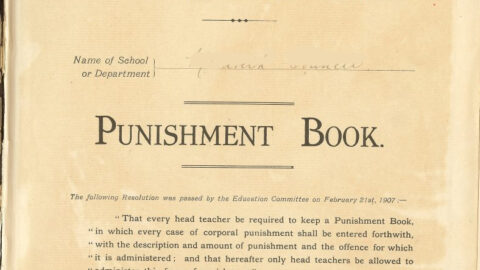
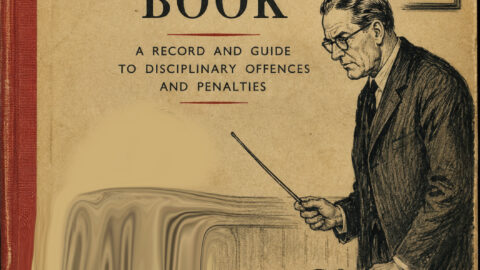
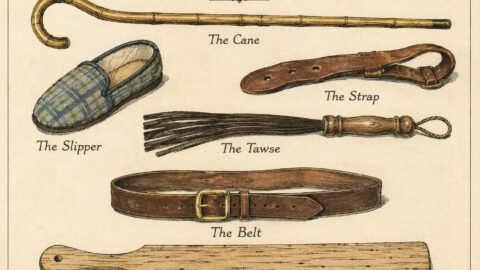
Amanda Burton, best known for her role as the formidable Headmistress in the TV series Waterloo Road, actually drew on her own real-life experiences with school discipline. Growing up in Northern Ireland, Amanda attended a strict Catholic school where corporal punishment was not uncommon. She recalls being caned more than once, often for minor infractions like talking out of turn or failing to complete homework. The sting of the cane was sharp, but what lingered longer was the sense of injustice and the determination it sparked in her to stand up for herself. Years later, she would channel that same steely resolve into her acting, bringing authenticity to her on-screen authority figures. (pause)
Dame Dianne Thompson, who would go on to become the trailblazing CEO of Camelot, the company behind the UK National Lottery, also faced the cane during her school days. The details are a bit hazy—no one seems to remember whether it was her hands or her bottom that bore the brunt—but what’s clear is that discipline was a constant presence in her formative years. Dianne has spoken about how these experiences taught her resilience and the importance of perseverance, lessons she carried with her as she broke glass ceilings in the business world. She often jokes that after surviving the headteacher’s cane, boardroom battles seemed far less intimidating. (pause)
Bruce Dickinson, the legendary frontman of Iron Maiden, has perhaps one of the most colorful school discipline stories of all. He attended Oundle School in Northamptonshire, a place with a reputation for both academic rigor and old-fashioned discipline. Bruce was never one to shy away from mischief. In a legendary act of rebellion, he arranged for two tonnes of horse manure to be delivered to his housemaster’s front steps—a prank that became the stuff of school legend. Reflecting on the aftermath, Dickinson later said, “I was beaten, but it was absolutely worth it. Six strokes of a cane and your arse would bleed, but it was definitely worth it, seeing two tonnes of steaming horse manure on the front steps of this gleaming Georgian facade and thinking, ‘I did that.’” The incident perfectly captures his irrepressible spirit and willingness to challenge authority, traits that would later define his career as a rock icon. (pause)
Unsurprisingly, Bruce’s antics didn’t end there. After the manure episode, he was expelled from Oundle—though the final straw, according to school lore, was an incident involving him allegedly urinating in the headmaster’s dinner. Whether or not the story is entirely true, it cemented his reputation as a troublemaker. Bruce then transferred to King Edward VII Grammar School in Sheffield, where he continued to push boundaries, but also began to channel his energy into music and performance. (pause)
It’s fair to say that neither Dickinson nor his housemaster were particularly charming characters, but their clashes were legendary. The housemaster, known for his strictness and unyielding discipline, met his match in Bruce, whose creativity and rebelliousness could not be contained by rules or punishments. Their confrontations became a kind of performance in themselves, each trying to outwit the other, and in the process, shaping Bruce’s sense of individuality and defiance. (pause)
Margaret Harris, who would later win Mastermind in 1984, was another formidable figure shaped by the culture of school discipline. As deputy head at Woolston Comprehensive in Southampton, she was known for her strictness and unwavering commitment to order. She reportedly caned both girls and boys well into the 1980s, long after many schools had abandoned the practice. But Margaret was more than just a disciplinarian—she was an expert in South African Postal History, a subject she pursued with the same rigor she brought to her teaching. Her reputation for discipline was matched only by her encyclopedic knowledge, and students both feared and respected her. Some former pupils recall her as a fair but formidable presence, someone who demanded the best from everyone around her. (pause)
There’s even more to Bruce Dickinson’s story. Beyond his rebellious streak and musical talent, he was also academically gifted—a fact that sometimes gets overshadowed by his rock star persona. He earned A-levels that secured him a place at Queen Mary College, University of London, a respected institution known for its demanding courses. (pause)
However, university life brought its own challenges. Bruce’s passion for rock bands and live performance often took precedence over his studies. He nearly got expelled after failing his second-year exams and neglecting to pay his accommodation fees. Yet, he possessed a rare ability to cram at the last minute, pulling off academic miracles that many students can only dream of. For those of us who struggled through university, his story is both relatable and enviable—a reminder that unconventional paths can still lead to success. (pause)
Eventually, Bruce’s musical ambitions took center stage. Graham “Thunderstick” and Paul Samson, both established musicians, saw Dickinson perform and invited him to join their band, Samson. Bruce agreed, but insisted on finishing his History finals first—a testament to his determination to see things through, even as he stood on the brink of rock stardom. Up until that point, he had been neglecting his university work, failing exams, and dodging bills. The university administration tried to expel him, but he was saved by his role as Entertainments Officer, a position that made him indispensable to campus life. It’s a story of near-misses, last-minute saves, and the kind of resilience that would later define his career both on and off the stage. (long pause)