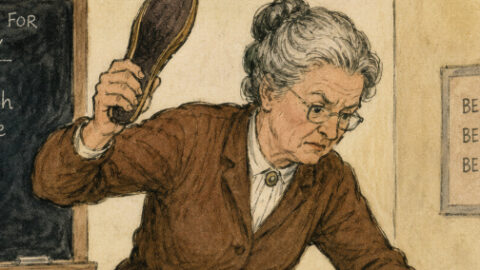
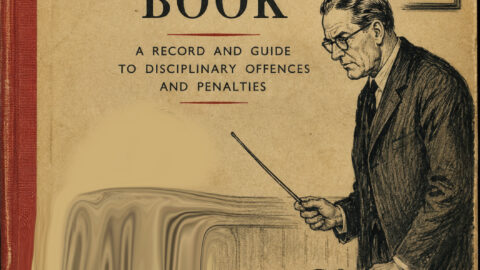
Recent examination of disciplinary practices in British schools during the 1950s, 1960s and 1970s has drawn renewed attention to the wide discretion once exercised by members of the teaching profession, particularly within secondary education. While corporal punishment formed an accepted part of school discipline during much of that period, a number of former pupils have recalled incidents in which masters and mistresses employed methods that appeared to fall outside officially sanctioned regulations.
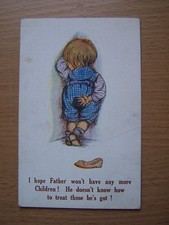
Among the more unusual recollections is that of a former pupil named Angela, who attended school in Birkdale. She remembered being struck by a male music master with what she described as a table tennis bat. There is little evidence to suggest that such an implement was formally approved for disciplinary purposes, and it is therefore possible that the master concerned acted on his own initiative. Whether the incident represented an isolated lapse in judgement or a more regular practice remains uncertain. Some observers have suggested that the item may merely have been at hand owing to the master’s involvement in school table tennis activities.
Students of school disciplinary records have also noted the repeated appearance of the expression “unspecified anatomy” in cases where the precise location of punishment was not recorded. In many Liverpool schools, surviving records suggest that corporal punishment followed a comparatively uniform pattern, usually involving strokes of the cane administered across the hand. This consistency has led some commentators to conclude that local education authorities may have imposed stricter limitations upon the punishment of girls than was customary in certain other regions of the country.
Only a single surviving reference has been identified concerning the use of the strap in a Roman Catholic school in Liverpool, despite reports that the implement was more widely employed in neighbouring Manchester. The available evidence therefore suggests that many Liverpool schoolgirls during the 1950s and 1960s escaped the more severe forms of corporal punishment associated with strikes administered to the buttocks, though disciplinary practices within the home may often have differed considerably.
Angela’s recollection of the Birkdale incident remains one of the few known references to the use of a table tennis bat in school discipline. Her account was brief and matter-of-fact: she stated simply that the music master had used such an implement upon her while she was in her second year at the school.
Another former pupil, Christine, later described disciplinary methods at Balliol Road School for Girls. According to her testimony, punishment directed at the buttocks was uncommon, while caning upon the hand represented the standard practice. She recalled receiving numerous punishments from members of staff, particularly a mistress named Miss Taylor and the headmistress, Miss Evans. On one occasion, at the age of fourteen, she was caned upon the buttocks after accidentally flicking custard onto a teacher supervising the midday meal. Christine later remarked that the experience caused her considerable embarrassment, far exceeding that associated with the routine hand canings she had previously received.
Some former observers have suggested that the headmistress may have regarded the punishment as proportionate to the humiliation caused to the supervising mistress. Whatever the reasoning, the incident appears to have been exceptional rather than representative of ordinary practice at the school.
Those who have studied recollections from Merseyside schools frequently remark upon the apparent consistency of disciplinary procedures throughout the region when compared with neighbouring counties. Former pupils’ accounts are often restrained in tone and modest in detail, while more sensational descriptions tend to be treated with caution, particularly where highly elaborate recollections of clothing or appearance are offered many decades after the events in question.
At Goresdale School, however, evidence suggests that punishment administered to the buttocks may have been more common than caning upon the hand, particularly in the case of girls. Precise details concerning the ages of those involved remain uncertain. One former pupil recalled being placed across the headmaster’s knee and spanked, together with several companions, following complaints from local residents concerning noisy behaviour near a neighbouring house. Another former pupil later confirmed the incident, though in terms strongly critical of the headmaster’s conduct.
Accounts from Eastway Secondary School likewise indicate that girls were occasionally subjected to corporal punishment upon the buttocks. One former pupil, Angela, recalled being caned by Mrs Girvan after forging a note in an attempt to avoid physical education lessons. She later discovered that the school had already sought permission from her mother, after which she reportedly received further punishment at home. Another former pupil, Elaine, separately remembered receiving the cane twice from the same mistress, whom she described as a formidable cookery instructor.
One particularly striking recollection concerns a science master, Mr Riley, who was said to have placed a girl across his knee and slapped her for talking during class. The former pupil who recounted the incident observed that such conduct would undoubtedly be viewed very differently in contemporary educational life.
Interestingly, punishments involving pupils being placed across a teacher’s knee appear to have been comparatively rare in secondary schools and are more commonly associated with the closing years of corporal punishment during the 1970s and early 1980s. Some researchers have expressed surprise at this pattern, having expected such practices to have been more widespread during the 1950s and 1960s. It is possible, however, that former pupils from earlier decades have simply been less inclined to discuss such experiences publicly.
Consideration has also been given to the broader question of how controversial disciplinary methods could persist for so long with comparatively little public challenge. Several explanations have been proposed. A master or mistress of long service and established reputation may have enjoyed considerable trust from governors, colleagues and parents alike. Others may have maintained discipline partly through force of personality, combining strictness with popularity among pupils and employing punishment in a manner intended not merely to deter misconduct but also to reinforce authority through public example.
Some observers have further suggested that certain teachers exercised careful judgement in selecting disciplinary methods unlikely to provoke complaint from either pupils or parents. In mixed schools particularly, it has been argued that masters wishing to avoid suspicion frequently ensured that boys and girls alike were subjected to comparable punishments.
Taken together, these recollections provide a revealing insight into the disciplinary culture of British schools during the mid-twentieth century. They illustrate both the broad authority once entrusted to teachers and the considerable variation with which that authority could be exercised from one school to another.