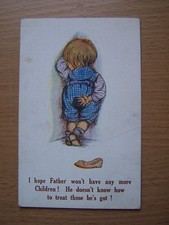
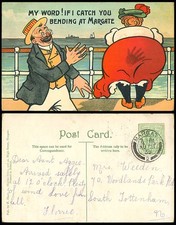
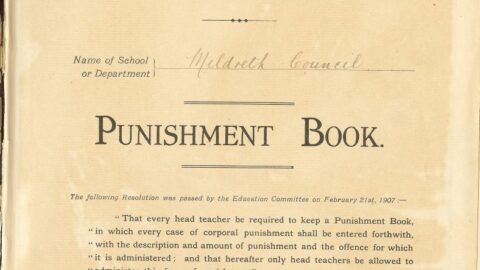
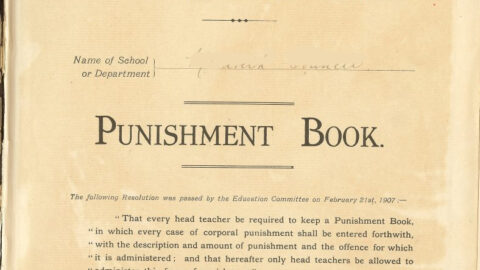
The following correspondence raises an interesting question concerning the purpose and use of punishment record books in schools. From the evidence presented, it would appear that their use varied considerably between institutions and periods.
As I understand it, the use of punishment books in schools may broadly be divided into two principal categories.
- The “limited record” system – This is the arrangement with which I am most familiar. In such schools, the majority of corporal punishment was administered informally and left unrecorded. The punishment book contained only entries relating to those pupils formally punished, usually by caning, by the headmaster, deputy headmaster, or another senior member of staff acting in their place. I believe that all the schools I attended during the 1950s and 1960s operated in this manner.
- The “comprehensive record” system – Under this arrangement, corporal punishment could only be administered by a small number of authorised senior staff, and every instance was formally entered into the punishment book.
A third possibility may also be imagined, whereby several teachers were authorised to administer corporal punishment and record it in multiple registers or sections of a larger record. However, such a system would seem cumbersome and difficult to administer in practice.
Readers may perhaps be able to suggest additional categories.
The questions that arise are therefore these:
- Does anyone know with certainty how punishment books were used in his or her school?
- Failing certainty, does anyone possess a well-founded understanding of how such records were maintained?
- It would also be helpful to know the nature of the school concerned — whether primary or secondary, state or independent — together with its region and administrative authority.
One correspondent recalls attending the anniversary celebrations of his former primary school, where his father had served first as deputy headmaster and later as headmaster before retiring. Among the historical exhibits on display was the school punishment book. He noted that it recorded only those formal punishments administered in the headmaster’s study and contained no mention of the slippings and smacks delivered in ordinary classrooms.
What particularly struck him was the contrast between his father’s administration and that of his successor. His father disliked using the cane and resorted to it only in exceptional circumstances, usually limiting the punishment to a single stroke. The succeeding headmaster, by contrast, frequently administered six strokes, which the correspondent felt excessive for boys under the age of eleven. He wondered whether such inconsistency between schools, or even between successive headmasters, was common.
Another writer states that his secondary school operated according to the first of the systems outlined above. Informal punishments administered during or after lessons were not recorded. The cane, however, was regarded as a more serious sanction and was administered privately, generally by the headmaster in the case of boys. Such punishments were duly entered in the punishment book.
During the 1970s, punishment books were generally considered confidential documents and were not left accessible to pupils. Although educational authorities could theoretically inspect them, it remains unclear under what circumstances this occurred, though it may have been connected with complaints concerning excessive or improper use of corporal punishment.
At that school, end-of-term reports informed parents of the number of detentions received by a pupil, though not whether corporal punishment had been administered. The correspondent believes this practice was intended more as a matter of parental awareness than as a formal mark against a child’s character.
Another former pupil suspects that informal classroom punishments were never officially recorded. Teachers commonly used their own slippers or rulers and did not obtain implements from the headmaster’s office or any central repository.
He does, however, recall one curious incident from approximately 1958 while attending a junior school. During the morning assembly, the headmistress announced that a boy had damaged a teacher’s bicycle and had consequently been caned. She then informed the pupils that, although caning was intended as a serious punishment, it ought always to be administered moderately, and that in this case the punishment had been excessively severe. Accordingly, the entry in the punishment book would be removed.
Looking back, the writer finds the episode rather unusual. He speculates that the punishment may have been officially sanctioned and that the boy’s parents, having observed the severity of the marks left by the caning, may have complained. The removal of the entry from the punishment book may therefore have formed part of an understanding reached between the school and the parents.
The school concerned was Gladstone Park Junior Mixed School near Dollis Hill in north-west London, then administered by Middlesex County Council. Formal corporal punishment there involved the cane for boys and, more rarely, the slipper for girls. Informal classroom punishments for boys, however, appear to have been common and could involve rulers, slippers, blackboard pointers, or whatever object happened to be available.
One contributor educated at a direct-grant grammar school remembers that only detentions appeared on end-of-term reports. After receiving his first caning at preparatory school at the age of nine, he was greatly relieved to learn that such punishments would not be communicated to his parents. Being shy and sensitive by temperament, he found the humiliation of the punishment more distressing than the physical pain and dreaded the embarrassment of parental discussion.
A Scottish correspondent states that he is certain no punishment book existed in either his primary or secondary school, nor has he heard of such records being maintained elsewhere in Scotland. He wonders whether this absence of official recording may have been characteristic of Scottish schools generally.
Another observer believes that most British schools were officially expected to maintain records of serious corporal punishment, though practices varied widely from one authority and school to another. In many cases, only punishments administered by the headmaster or deputy headmaster were entered. These official punishments usually involved the cane, though some schools used the strap or slipper instead.
Printed punishment record books were available commercially and also produced by local education authorities. They generally contained only basic information: the pupil’s name, age and class, together with the offence, the punishment administered, and the teacher responsible. In some instances the headmaster’s signature was required if another teacher had imposed the punishment. Such records seldom indicated whether the punishment had been administered to the hands or the buttocks.
The same writer recalls that classroom slippings at his secondary school during the 1950s and 1960s were certainly not recorded. He remembers witnessing a metalwork teacher administer three strokes of the cane to a boy for a dangerous prank that resulted in another pupil being slightly injured. The punishment was carried out publicly over a workshop bench.
He himself experienced occasional slipper punishments in class before later receiving three strokes of the cane from the headmaster, together with two other boys, for what he described as a foolish prank. The punishments were administered in each other’s presence, and he remembers the headmaster making an entry in a book beforehand.
Several correspondents suspect that punishments administered by physical education staff were seldom, if ever, officially recorded. One writer remarks that such masters often appeared to operate outside ordinary disciplinary conventions.
Another contributor reflects that physical education uniforms, particularly the thin cotton shorts commonly worn at the time, afforded very little protection against corporal punishment. At his own school, younger boys were required to swim naked until approximately the age of fourteen, which, he suggests, exposed them to particularly humiliating treatment. He recalls one master, whom he strongly suspected of possessing sadistic tendencies, using a garden cane on boys called from the swimming pool for perceived misbehaviour.
He notes, however, that older pupils were not treated in this fashion, perhaps because the teacher recognised that such conduct towards senior boys might provoke serious objection. By the mid-1960s, attitudes towards corporal punishment were already beginning to change. On one occasion, several sixth-form pupils witnessed a younger boy being caned by this master and expressed indignation at the severity of the punishment, agreeing that it was wholly improper. Nevertheless, no formal complaint was made.
As one observer aptly remarked, the customs of earlier generations now seem to belong to another world entirely, governed by assumptions and standards very different from those of the present day.