The experience of corporal punishment varies considerably depending on the instrument used, the area of the body being struck, and the technique of the person administering it. While comparisons are inevitably subjective, certain patterns emerge when considering the effects of the cane, tawse, paddle and slipper.
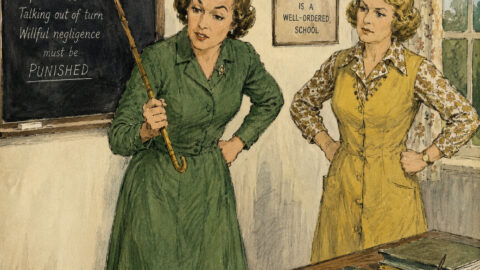
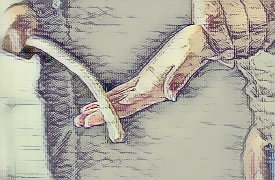
One interesting observation is that caning on the hand often appears to be more immediately painful than caning on the buttocks, particularly during the first few strokes. A likely explanation is that the buttocks present a larger target area, allowing the person wielding the cane to strike with confidence and full force from the outset. By contrast, the palm of the hand is a much smaller and more delicate target. There is often a natural tendency to exercise slightly greater caution when delivering the first few strokes, both to ensure accuracy and to avoid unintended injury. Even so, the hand can be extraordinarily sensitive to impact.
The nature of the cane itself also plays a significant role. Some canes are relatively flexible and absorb part of the shock within the shaft, while others are extremely dense and rigid. These harder canes transmit almost the entire force of the stroke directly into the target. When used on the hand, the effect can be particularly severe, as the impact travels through the bones, joints and tendons of the fingers and wrist. The resulting sensation is not merely a surface sting but a deep, penetrating pain that can feel as though the entire hand has been jarred. With a dense cane, even a relatively small number of strokes can become almost unbearable.
A similar principle applies to the tawse. The severity of a tawse often depends less on its thickness and more on the density and firmness of the leather. A well-made, dense tawse can deliver a sharp, forceful impact that penetrates deeply into the hand, producing a level of discomfort comparable in some respects to that of a hard cane.
The buttocks react differently to impact. Although caning the bottom is undoubtedly painful, many people find it easier to endure than caning the hand. The larger muscle mass in the buttocks helps absorb some of the force, reducing the jarring effect experienced when the bones and joints of the hand are struck. The location of the stroke is also important. Caning lower on the buttocks, where there is a greater thickness of muscle and tissue, is often perceived as more tolerable. By contrast, strokes delivered higher up can be significantly more painful because there is less cushioning between the skin and the underlying bone structure. The position of the recipient may also influence the experience; when bent over, the skin and muscle are stretched, potentially increasing both the intensity of the impact and the resulting pain.
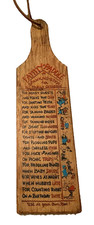
The paddle produces a distinctly different form of punishment. Whereas the cane is associated with a sharp, concentrated sting, the paddle tends to spread the force over a broader area. The immediate sensation may not always be as acute as that of a cane stroke, but the paddle’s principal effect is often the bruising it creates deep within the muscle tissue. As a result, discomfort can persist long after the punishment itself has ended. Sitting, walking and other everyday movements may continue to aggravate the affected muscles for hours or even days afterwards.
Surface finish can also influence the effectiveness of an implement. This is particularly noticeable with paddles and slippers used on the bare buttocks. A paddle with a smooth, highly polished or varnished surface is capable of making very complete contact with the skin at the moment of impact. As the paddle rebounds, the skin may briefly adhere to the smooth surface before releasing. This creates an additional pulling sensation that accompanies the strike itself. Many people describe this effect as similar to the feeling produced by a twisting friction burn, adding a secondary layer of discomfort beyond the initial impact.
The slipper shares some of these characteristics, especially when it has a smooth sole and is applied firmly to bare skin. While generally less intense than a cane or heavy paddle, the slipper can still produce a sharp sting combined with a distinctive sensation caused by the broad contact area and the way the skin reacts as the sole rebounds after impact.
Ultimately, each instrument creates pain through a different combination of sting, shock, bruising and skin sensation. The cane excels at delivering a concentrated, penetrating impact; the tawse combines sharpness with weight; the paddle produces deep muscular soreness; and the slipper relies on a broad stinging contact. The differences between them help explain why individuals often report widely varying experiences, even when the number of strokes or strikes is similar.