The late 1960s was a period of profound social change, and it must have been a particularly confusing time for traditional forms of discipline. For the first time, large numbers of young people began to question authority in ways that previous generations rarely had. Established institutions, social conventions, and long-accepted hierarchies were all being challenged.
For many teenagers, authority figures such as parents, teachers, police officers, and community leaders increasingly came to represent an older order that seemed out of touch with the rapidly changing world. A teenage girl growing up during this period might have viewed her father, the headmaster at school, or the local policeman walking the neighbourhood beat as representatives of a system she was encouraged to question rather than automatically obey.
Popular culture, political activism, and the growing influence of youth movements promoted ideas of personal freedom, equality, and resistance to authority. It was no longer unusual for young people to challenge parental decisions or openly argue against rules they considered unfair. Phrases such as “Don’t manhandle me” or accusations of being “oppressive” or “authoritarian” reflected a broader shift in attitudes that would have seemed remarkable only a decade earlier.
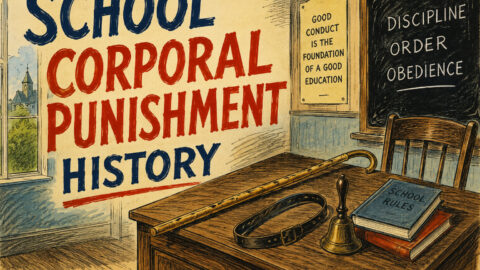
This cultural transformation raises an interesting question about the place of corporal punishment during this era. For generations, many fathers had disciplined their daughters in ways that were considered normal and acceptable at the time, including the traditional over-the-knee spanking. Such methods had been handed down from one generation to the next and were rarely questioned within the family.
However, by the late 1960s, the social landscape was changing rapidly. As young people embraced new ideas about independence and personal autonomy, traditional disciplinary practices may have appeared increasingly outdated. A disciplinary method that had once been accepted without question could suddenly seem out of step with a generation that was actively challenging authority and demanding greater personal freedom.
Whether this resulted in a widespread decline in corporal punishment is difficult to determine. Attitudes often change more slowly than cultural trends, and many families likely continued to use traditional disciplinary methods despite the social upheavals taking place around them. Nevertheless, the era undoubtedly created tensions between established practices and emerging values.
It is important, however, not to exaggerate the extent of youth rebellion during this period. Looking back, popular culture sometimes creates the impression that every teenager was a politically active hippie involved in protests, drug culture, or radical social movements. The reality was often far more ordinary.
As someone who was fourteen years old at the time of the Woodstock Music Festival, I certainly did not encounter large numbers of teenage anti-war activists or drug users. Even among sixth-form students, I cannot recall knowing anyone who openly used drugs. Such behaviour may have existed in some circles, particularly among older university students, but it was far from commonplace in many communities.
Unfortunately, the situation appeared to change significantly in later decades. During the last twenty years, substance abuse among younger age groups has become far more visible in some areas.
I recall visiting a building in a local public park where a group of young people had gathered. Among them was a girl who could not have been more than eleven or twelve years old. Within a matter of minutes, after using a substance the group referred to as “blow,” her speech became noticeably slurred and her behaviour changed dramatically. The transformation was both sudden and disturbing.
Concerned by what I had witnessed, I later found evidence suggesting the use of both cannabis and heroin at the same location. Believing it was my responsibility as a member of the community, I collected the evidence and delivered it to the local police station.
To my disappointment, no apparent action was taken. The site continued to attract similar activity, and there seemed to be little interest in addressing the problem. What made the situation particularly frustrating was that, not long afterwards, the local community police officer received official recognition for services to young people.
The contrast between the authorities’ apparent lack of response and the recognition being awarded left a lasting impression. It served as a reminder that social problems can persist even when they are plainly visible, and that official responses do not always align with the concerns experienced by local residents.
Looking back, the contrast between the late 1960s and the present day is striking. While that earlier era is often remembered for youthful rebellion and challenges to authority, many communities at the time experienced relatively little of the drug culture that later became more widespread. At the same time, traditional disciplinary methods that had once been accepted as normal were increasingly coming under scrutiny, reflecting broader changes in attitudes towards authority, personal freedom, and the relationship between generations.