Having examined the so-called “Six Great Schools”, it is appropriate now to consider the institutions later admitted to their company. In 1958, the Associated Public Schools of Victoria expanded its membership by inviting five additional schools to join the original six. Their inclusion was widely regarded as conferring upon them a position of considerable prestige and tradition among the leading boys’ schools of the State.
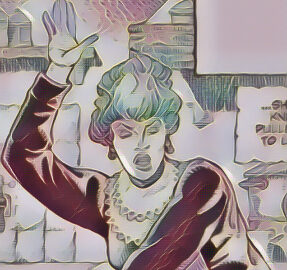
The first of these schools under consideration is St Kevin’s College, the second Catholic institution admitted to the APS. Conducted by the Christian Brothers, the school’s history contains several references to the disciplinary practices common to the period, including corporal punishment. One notable example was a cartoon published in a prominent Melbourne newspaper during the 1960s, at the time when Scotch College and St Kevin’s were opposing plans by the Melbourne Metropolitan Board of Works to acquire portions of their sporting grounds for freeway construction.
The following extracts are taken from St Kevin’s College: 1918–1993 by Chris McConville.
“Brother Paul Sebastian Mulkerns, an Irishman who suffered from asthma, appeared ill at ease both in Australia and Ireland, moving several times between the two countries. Mulkerns was an enthusiastic, though at times severe, disciplinarian. Former students at North Melbourne recalled that he frequently taught with a wooden rod in his hand.”
“Students encountered an even more distant figure in Brother Saul, Principal from 1947 to 1949. J. A. Saul arrived at St Kevin’s determined to improve academic standards within the school. It was reportedly his practice to require senior boys to study during the luncheon interval, books in hand while they ate. Many years later, Eric Stevenson recalled his first encounter with Saul.
Eric had become fascinated by a schoolyard game known as ‘throwball’, played each lunchtime at the rear of the college grounds. While attempting to understand the intricacies of the game, he was discovered near the sheds when he should not have been there, and received six strokes of the cane from Saul. Thus began his introduction both to St Kevin’s and to ‘Socker’ Saul.”
“Another Brother remembered by former students for his stern manner was Brother English. Several boys recalled him sitting at the front of the classroom with his sleeves rolled up and his strap placed conspicuously upon the desk.”
“Among the teaching staff, few left a more vivid impression upon students than Paddy Wright, who joined St Kevin’s after teaching at Trinity Grammar School. He was regarded by colleagues as a devoted master who conveyed considerable enthusiasm to his pupils, despite—or perhaps because of—his unconventional methods.
Students awaited the return of essays from Wright with understandable apprehension. His customary expression of dissatisfaction with a piece of work was to draw a tombstone at the top of the page. Such a mark indicated that the student concerned was liable to disciplinary action with the strap.
Wright would then proceed through the classroom carrying a box of chocolates. Those summoned for punishment were invited to select a chocolate, only to discover upon opening the box that it contained the neatly coiled strap prepared for use. Curiously, several former pupils later observed that, while they strongly resented corporal punishment administered by other masters, Wright’s use of the strap was generally accepted with comparatively little hostility.”
Attention may also be directed to St Bede’s College. The principal source for the following material is St. Bede’s College and its McCristal Origins 1896–1982 by Leo Gamble, published in 1982.
St Bede’s is regarded as the successor to the earlier Mentone College, frequently known as McCristal College after its founder and headmaster, Thomas McCristal. The new institution initially occupied the same premises, and many former pupils of Mentone College later enrolled their sons at St Bede’s.
The first eight chapters of the history are devoted to Mentone College and to the broader development of education in the Mentone district, an area notable for its concentration of schools. Mentone College also maintained a close association with Xavier College. Thomas McCristal had been a student there during its second year of operation and later became one of its earliest lay masters. He consciously modelled his own school upon Xavier.
Concerning Meeres’ School, the history records:
“It appears that after the kindly and cultivated Mr and Mrs Meeres returned to England, the school passed into the hands of a Mr Chambers, whose principal delight seemed to lie in administering severe canings with selections from his extensive collection of canes.”
Of Mentone College itself, the account states:
“The experience of one new pupil illustrates the nature of school discipline. One February morning, a twelve-year-old boy from a grazing property in the Riverina arrived for his first day at Mentone College. Turning about, he caught sight of the waters of Port Phillip Bay through the trees only a short distance away. Filled with curiosity at seeing the sea for the first time, he ran across the road to the cliffs to look upon it more closely. Upon his eventual return to the school, McCristal administered ‘the cuts’ for leaving bounds without permission.”
Another former pupil recalled an incident during a Sunday excursion near Mordialloc:
“He and a companion had fallen behind the main party of walkers and entered a shop on Beach Road, where they purchased a packet of Capstan cigarettes, which they smoked among the coastal scrub. They then hurried along the beach in an attempt to rejoin the group, only to discover that McCristal had placed the remainder of the boys upon the train at Edithvale and returned to Mentone.
Possessing no money for train fares, the pair were obliged to walk back along the beach to the school. Upon their arrival several hours later, McCristal awaited them and administered a severe strapping before sending them to bed without their evening meal.
To be out of bounds, even during an organised excursion, was regarded as a grave offence for boarders. One of the boys concerned, together with another member of the party, recalled the incident some sixty years later. There was, however, a more charitable conclusion to the affair. Later that evening Mrs McCristal entered the dormitory carrying a tray of hot cocoa and buns for the two boys who had been sent to bed in disgrace.”
The history further notes:
“A strict code of rules was considered necessary, as the school advertisements promised that boys would be treated as members of the Principal’s own family. Discipline under McCristal was consequently firm and consistent. Any boy found out of bounds was liable to receive the strap and to forfeit privileges, including meals. Bird-nesting, a favourite pastime among adventurous boys, was strictly prohibited, and offenders were punished accordingly.”