Discipline at Melbourne Grammar School has long occupied a central place in the institution’s history, though accounts from former pupils and official records reveal methods that today would likely provoke considerable controversy.
In Challenging Traditions: A History of Melbourne Grammar, historians Weston Bate and Helen Penrose recount numerous examples of the severe disciplinary practices employed at the school across different eras.
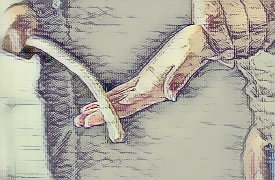
One former pupil recalled conditions at Leighwood House in 1935, where discipline was reportedly administered through the use of “an extremely cruel horsewhip.” According to the account, injuries caused by the implement were eventually observed by the school doctor, who ordered that the whip be prohibited. The same recollection states that two boys secretly removed and concealed the whip before it could be destroyed, thereby complicating efforts to locate it. The writer later reflected that the incident might be regarded as an example of youthful independence and initiative.
The school’s early headmaster, Dr John Edward Bromby, was also noted for his rigorous disciplinary methods. Although Bromby did not publicly share some contemporary anxieties concerning the management of Australian boys, he nevertheless imposed swift and severe punishments, at times provoking complaints from parents.
Particular objection was raised over the use of what became known as the “Black Hole” — dark confinement spaces used for punishment. The School Council informed Bromby that parents strongly objected to “the confinement of boys in closets from which all light is excluded,” and requested that such punishments cease.
Bromby defended the practice, explaining that the rooms were intended merely to prevent reading and were not entirely without light. He added that modifications could be made if the Council deemed them necessary. He further assured the Council that corporal punishment could not be administered without his approval and that existing regulations would be properly enforced.
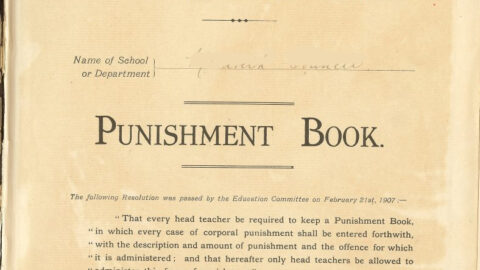
Records from 1863 indicate that Bromby personally administered corporal punishment approximately once each year, though “always pretty sharply.” In one documented incident, he described flogging a pupil accused of stabbing another boy with a penknife. The offender reportedly denied responsibility, then claimed the act had been accidental and done in play, before finally alleging that the other boy had first assaulted him.
The Reverend Andrew Wilson, another headmaster of the school, similarly acquired a reputation as a strict disciplinarian during the late nineteenth century. Though the school prospered during his tenure, the Council expressed reservations concerning his conduct and disciplinary authority.
Wilson was known to impose collective punishments for comparatively minor infractions, including lateness to breakfast, offences that could result in Saturday detentions lasting up to two hours. Matters came to a head in 1889 when the Council demanded an explanation after receiving written complaints concerning the treatment of a prefect accused of failing to kneel during prayers.
According to testimony submitted to the Council, Wilson summoned the prefect to his study and demanded an explanation. When the boy was unable to provide one immediately, the headmaster reportedly threatened him with caning and then, “losing all control over himself,” struck him repeatedly about the head and shoulders with a large cane. The prefect attempted to flee, but Wilson allegedly pursued him, struck him after he fell, and then returned him to the study for further punishment.
The prefect’s father lodged a formal complaint, arguing that such treatment was wholly inappropriate, particularly in the case of a prefect, and criticising the prefect system itself. Wilson nevertheless compelled the boy to apologise and later expressed resentment at what he regarded as unwarranted interference by the Council in matters of school discipline.
Accounts from the twentieth century suggest that harsh disciplinary measures persisted well into modern times. Former pupil Tony Trumble, recalling his experiences during the wartime evacuation to Healesville in 1942, described a school environment dominated by authoritarian discipline, compulsory sport, and frequent use of the cane.
Trumble reserved particular bitterness for boarding house master Bill McKean, who revoked his permission to return home for a weekend after he arrived late to a meal. Trumble later wrote that the loss of weekends at home was, to him, a punishment more distressing than corporal punishment itself. During the subsequent weekend he was again late for afternoon tea and consequently deprived of another visit home, an experience he described as profoundly distressing.
The broader role of corporal punishment at Melbourne Grammar remains a matter upon which former pupils hold sharply divided opinions. For many, such practices were accepted as an ordinary part of school life and the discipline associated with elite education before the Second World War. Others, however, regarded the system as oppressive and educationally ineffective.
One former student reflected that repeated canings administered by “a sadistic master” did nothing to improve his understanding of geometry. Another argued that his years at the school produced in him a lasting dislike of rigid institutional authority and excessive regimentation.
Tensions concerning discipline and authority were also evident during the tenure of headmaster Joseph Richard Sutcliffe. Relations between Sutcliffe and the School Council deteriorated significantly, culminating in one of the most dramatic disputes in the institution’s history.
The conflict arose from what later became known as “The Dancing Class Incident” at Merton Hall. Friday evening dancing classes, conducted by Alan Finlayson and his sister Janet for senior and junior boys and girls from associated schools, had previously been regarded as routine social occasions. However, disciplinary measures imposed by Sutcliffe against pupils involved in the incident led to a direct confrontation with the Council, which ultimately refused to support his decisions regarding expulsions and punishments.