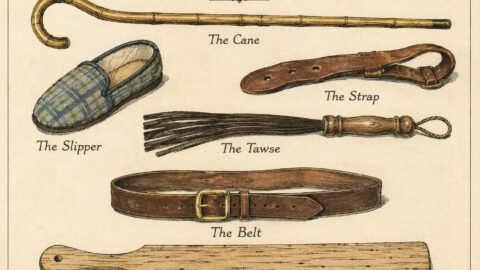
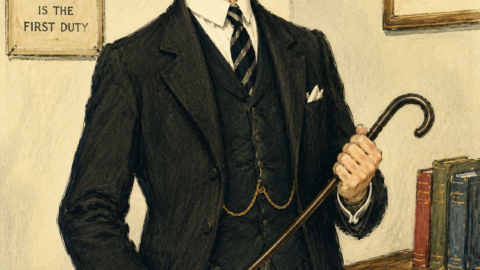
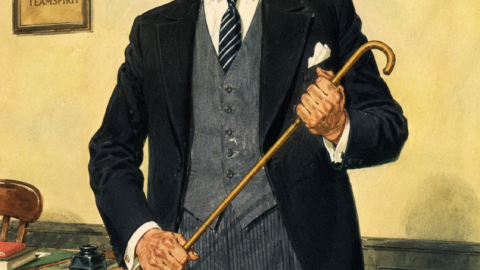
Discussions about traditional school punishments often focus on the severity of different implements, but much depends on their design, the manner in which they were used, and the circumstances surrounding their application. Having personally experienced both the tawse and the cane, I am able to offer some observations based on firsthand knowledge rather than speculation.
The Birch and Its Variations
When considering the birch, it is important to recognise that not all birches are the same. Their effectiveness depends greatly on how they are constructed. A traditional spray birch, made up of numerous fine twigs spreading outward, distributes its impact over a wider area. While this can produce an intense stinging sensation, the force is spread across the skin rather than concentrated in one place.
By contrast, a birch consisting of only a few thicker stems or twigs delivers a very different experience. The heavier rods focus their energy onto a smaller area, producing a much sharper and more penetrating impact. Although I have no direct experience of receiving a traditional birching, I have encountered comparable bamboo implements, and the principle is much the same. A tightly bound bundle of canes or twigs is considerably more severe than one whose individual strands are allowed to fan out and disperse the force.
The Tawse: A Formidable Instrument
Of all the implements used in schools, the tawse was undoubtedly one of the most feared. In particular, the heavier Lochgelly and J. J. Dick models, especially the H and Extra Heavy (XH) versions with two or three tails, were formidable instruments. These were not merely symbolic punishments; when applied firmly to the hands they delivered a level of pain that was difficult to endure.
Anyone who has experienced a genuine heavy tawse will know that its reputation was well deserved. The thick leather tails could generate tremendous force, producing an immediate, intense sting followed by deep aching that could persist long after the punishment had ended. Claims that such punishments were mild or insignificant are difficult to reconcile with the reality of receiving them.
Like most pupils of the period, my own encounters with the tawse were generally confined to the hands, as this was the standard and officially sanctioned method of administration. Even so, a properly delivered tawsing was an experience that commanded respect and was rarely forgotten.
Punishments Beyond Official Practice
Occasionally, however, some punishments took place outside normal school procedures. There were instances in which a teacher might administer a tawsing after school hours for behaviour that, while serious, was considered better dealt with privately than reported to parents. In such circumstances, the punishment could be delivered to the seat of the shorts or, in some cases, directly to the bare skin.
I experienced this form of punishment myself and can attest that it was considerably more painful than the standard punishment administered to the hands. The sensitivity of the area, combined with the power of a heavy tawse, made for an extremely memorable experience.
The Cane and Its Effects
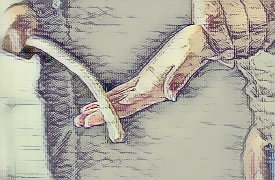
The cane was another punishment that inspired considerable apprehension. Looking back, the practice of caning the hands seems particularly questionable. Even when a lighter junior cane was used, the impact could be severe. These thinner canes were extremely flexible and generated a sharp, vibrating shock that seemed to travel through the fingers and hands, leaving them throbbing long afterwards.
For punishment administered to the buttocks, heavier canes were generally employed. These delivered a much deeper and more forceful impact than the lighter hand canes and were widely regarded as far more severe.
There has long been debate about whether punishment was worse over clothing or on bare skin. From my own experience, I found that the difference was not always as great as people might imagine. I received numerous canings across satin or nylon shorts, and while the material offered some degree of protection, the force of a properly delivered stroke still penetrated effectively. The pain was intense regardless of whether the punishment was administered over lightweight clothing or directly to the skin.
Looking Back
Today, my interest in these historical disciplinary practices comes from a position of experience and reflection. Having been on the receiving end of both the tawse and the cane, I have a clear understanding of the physical effects they could produce. That personal knowledge provides valuable context whenever the subject is discussed, allowing me to distinguish between myth and reality.
While memories of such punishments remain vivid, they also serve as a reminder of how attitudes toward discipline have changed over time. The tawse, the cane, and the birch are now largely relics of a different era, but for those who experienced them, they remain unforgettable parts of educational history.